The Gap That Opens Up When Permits Are Issued
There is a moment in every development project where the owner feels like the hard work is behind them. The approvals are in hand. The permits are issued. The contractor is mobilized. After months of navigating planning boards, agency reviews, and engineering revisions, the project is finally under construction and moving forward. That feeling is understandable. It is also exactly when the owner’s exposure is at its highest, and it is exactly when the engineer of record most often steps off the job.
The dynamics that produced this pattern are not difficult to understand. Budget pressure is real. Owners who have spent months paying for engineering during entitlement are looking for places to reduce cost as they move into construction. Construction observation is a line item that feels discretionary when the design is complete and the contractor is competent. The drawings are done. The permits are issued. What is left to engineer?
The answer, in practice, is a great deal. The approved drawings represent the design intent. What gets built represents the contractor’s interpretation of that intent, under field conditions, with materials and subcontractors and schedules that no one controlled during design. The gap between those two things, between what was designed and what was built, is where owners get hurt. And without the engineer of record maintaining a presence during construction, there is no one whose job it is to close that gap.
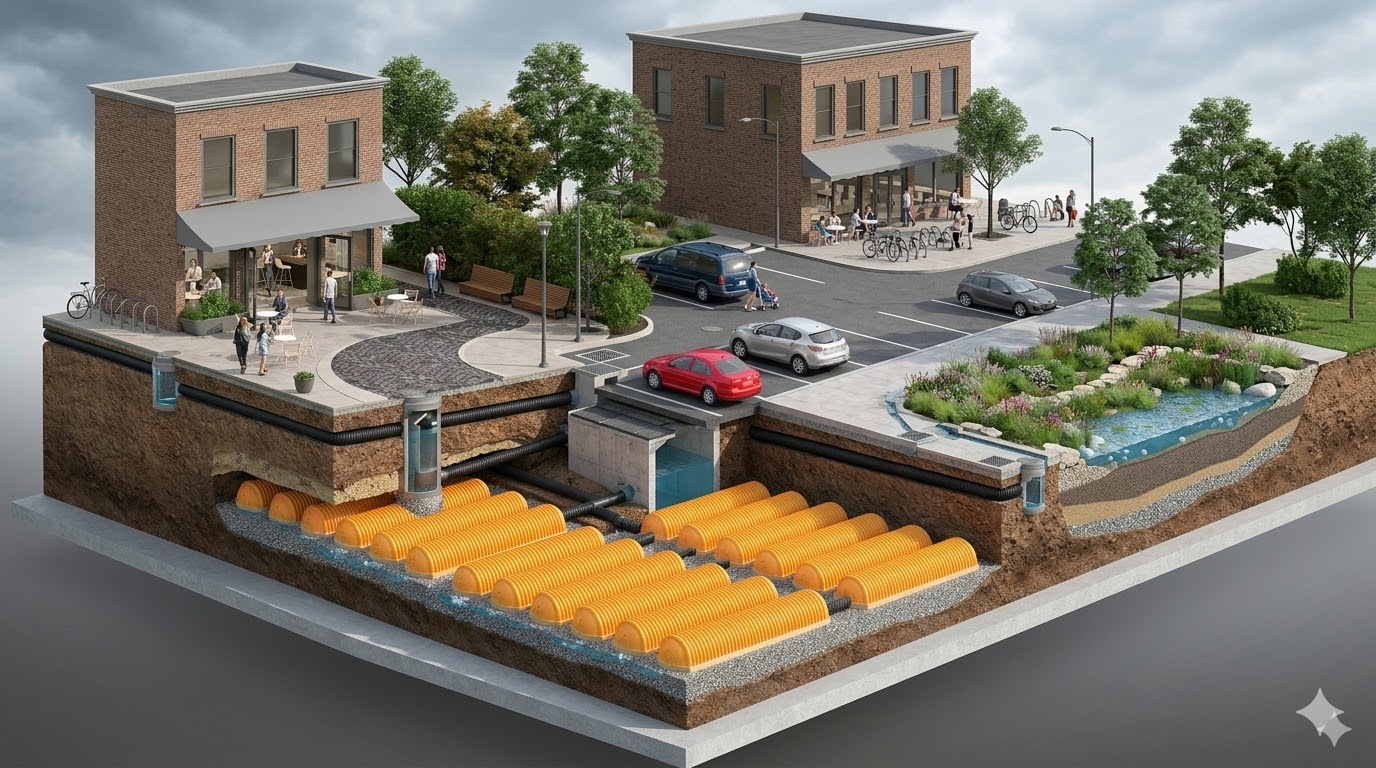
The contractor becomes the final arbiter of their own work. RFIs and field questions get answered by the contractor's superintendent rather than by the design engineer. Shop drawing submittals get filed or ignored without the person who designed the system verifying that what is being installed is what was specified. Progress billings get approved against work that may not have been executed to plan. And the stormwater management infrastructure that carries regulatory obligations running with the land for decades gets built without anyone verifying that it was built correctly.
None of that is a hypothetical. It is the default condition on projects where construction phase engineering services have been cut from the budget.
Your Bond Is Tied Up. Your Contractor Is Gone. Now What?
Before a shovel goes in the ground on most commercial and industrial projects in Western New York, the town requires the owner to post a letter of credit or cash bond. The purpose of that requirement is straightforward: the municipality wants assurance that if the owner walks away from the project midway through construction, the town has financial recourse to ensure the site improvements are completed. The letter of credit estimate, which is typically prepared by the engineer of record and reflects the value of the approved site improvements, is the basis for the bond amount.
That requirement is reasonable. The problem is what happens at the other end of the process, when the owner is trying to get that credit released.
Release of the letter of credit is almost always conditioned on a final inspection and the submission of as-built drawings that demonstrate the site improvements were completed as approved. The owner, who has been carrying this bond through the entire construction period, wants it released as quickly as possible. The contractor, who has finished the site work and moved on to their next project, has little incentive to return to the site for corrections. The as-built drawings are submitted, often weeks after the contractor has demobilized. The town reviews them against the approved design. And if there are discrepancies, the owner is left holding a frozen line of credit with no practical leverage over the contractor who caused the problem.
This is not a rare scenario. It is a predictable consequence of removing the engineer of record from the construction phase on projects where the letter of credit is tied to site improvement performance. The municipality’s quality assurance mechanism, the bond itself, works backwards: it holds money until completion but has no mechanism for verifying quality during construction, which is the only time quality can actually be controlled.
There is also a natural and underutilized connection between the letter of credit estimate and the construction observation scope. The LOC estimate that the engineer prepares for the town is a line-item inventory of every site improvement that needs to be built: grading, drainage structures, stormwater infrastructure, utilities, pavement, and erosion controls. That same list is precisely the scope of work that needs to be observed and verified during construction. The two documents should inform each other, and in a well-managed project, they do.
Five Things the Engineer of Record Protects During Construction
Construction phase engineering services are often thought of as a single undifferentiated activity: someone visits the site and looks around. In practice, they protect five distinct categories of owner interest, each with its own cost exposure when that protection is absent.
-
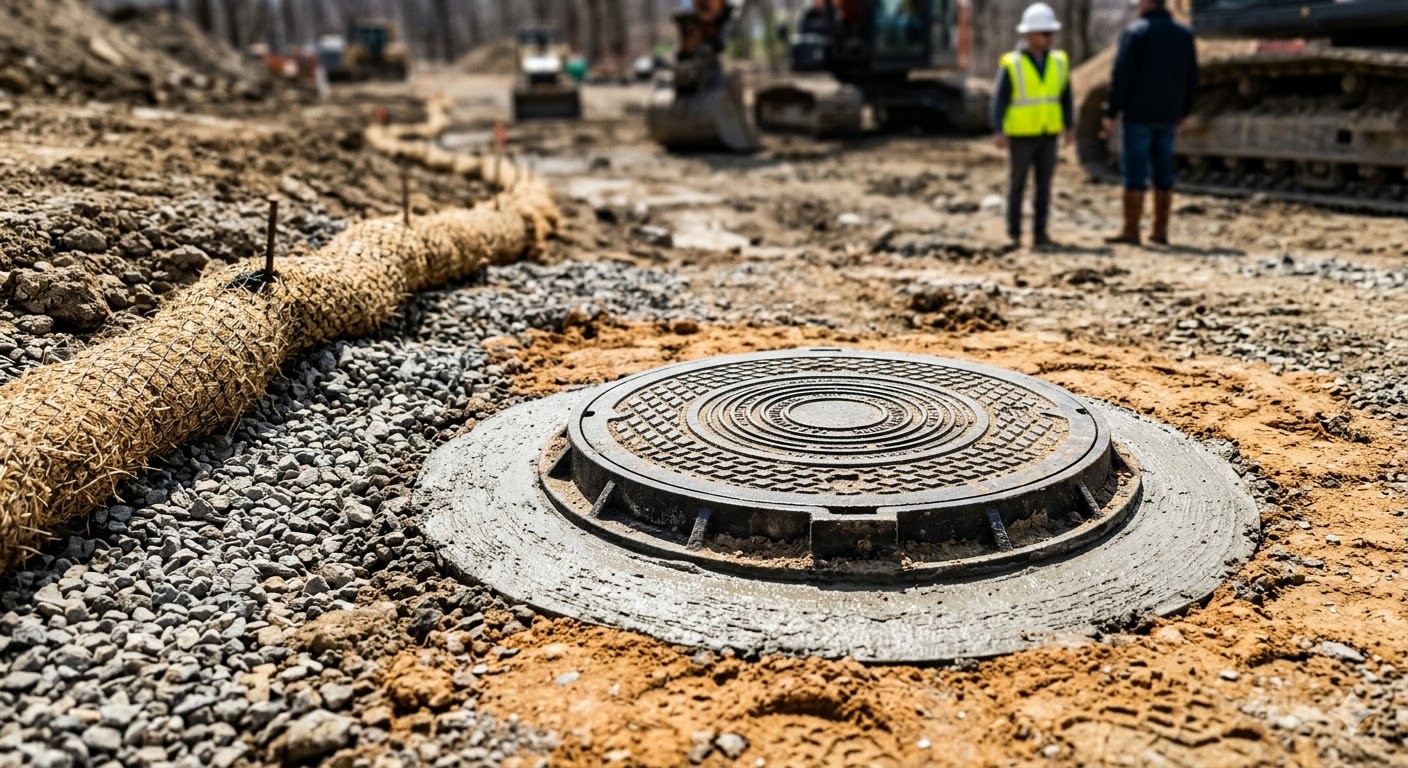
Design intent verification. The approved drawings establish what the project is supposed to look like when complete. The contractor's interpretation of those drawings, under field conditions and schedule pressure, produces what it actually looks like. The engineer of record is the only party on the project whose job is to verify that the two match, to identify deviations before they become permanent, and to issue field directions or revised details when conditions require adjustment. Without that presence, deviations accumulate silently until the as-built makes them visible, at which point correction is far more expensive than prevention would have been.
-
RFI and shop drawing management. Contractors generate Requests for Information throughout construction: questions about design details, clarifications on specifications, requests to substitute materials or methods. Those questions deserve answers from the engineer who made the design decisions, not from the contractor's superintendent. Similarly, shop drawing submittals for drainage structures, precast concrete, stormwater management systems, and other engineered components require review by someone who can evaluate whether the submitted product meets the design intent. Unanswered RFIs and unreviewed shop drawings are not just administrative gaps. They are substitutions and interpretations made without engineering authorization, and their consequences show up in the finished product.
-
Progress billing verification. Construction contracts typically provide for periodic progress payments tied to the percentage of work completed. An owner who is paying progress billings without an independent verification of what has actually been constructed is paying on the contractor's self-reported completion percentage, which has an obvious and well-documented tendency toward optimism. The engineer's periodic observation reports provide the owner with an independent assessment of construction progress that justifies what is being paid and creates a documented record if disputes arise.
-
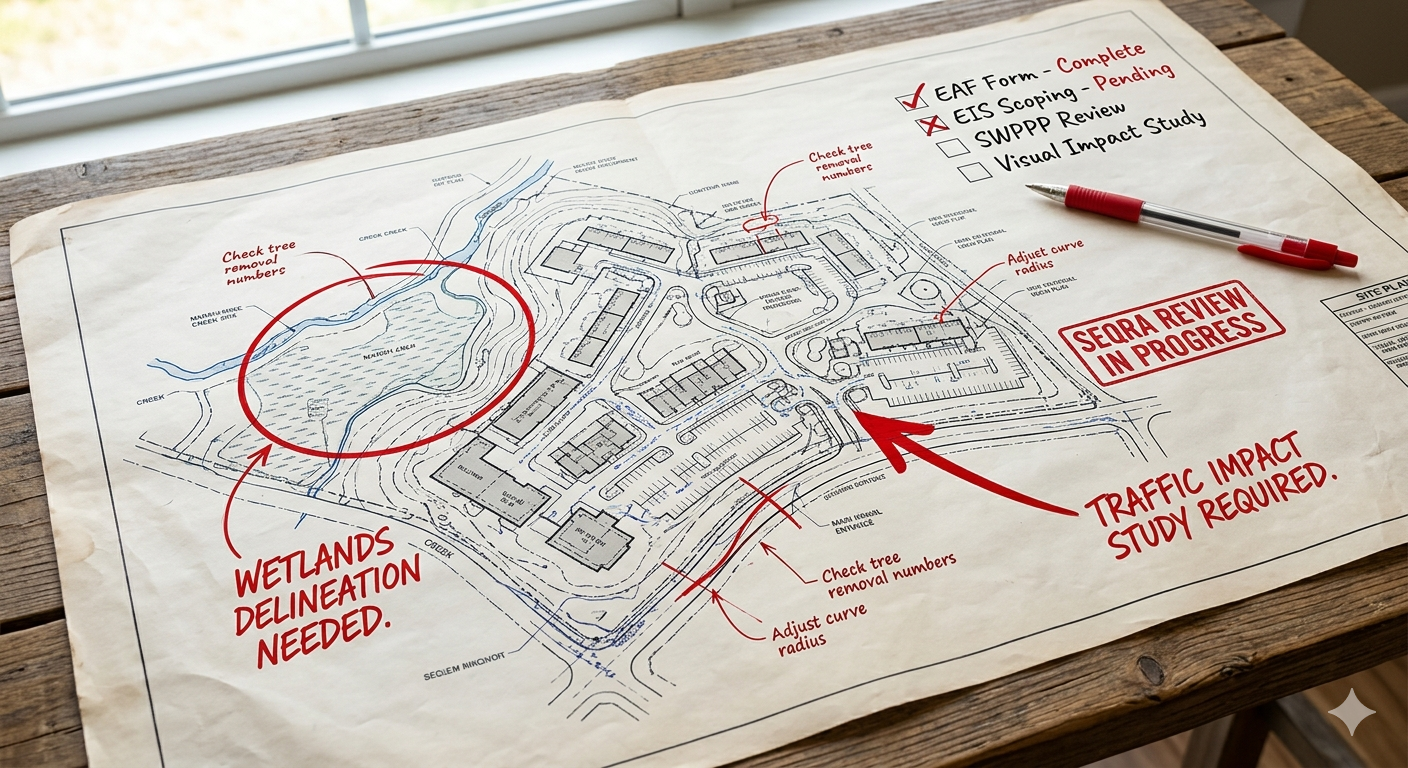
SWPPP regulatory compliance. The Stormwater Pollution Prevention Plan is not a document that gets filed and forgotten. It is an active compliance obligation that requires regular inspection of erosion controls, documentation of site conditions, and corrective action when deficiencies are identified. NYSDEC requires these inspections to be performed and logged by a qualified inspector throughout the construction period. An owner who is not maintaining this record is in violation of their SPDES permit, and that exposure does not disappear when construction ends. Coupling SWPPP compliance inspections with construction observation visits is a practical and cost-efficient way to satisfy both obligations simultaneously.
-
Certificate of occupancy and credit release support. The two most important finish-line events for an owner, the CO and the letter of credit release, both depend on demonstrating to a municipal reviewer that the project was built as approved. An owner who has a documented construction observation record, with dated inspection reports, field photographs, verified elevations, and a log of RFIs and their resolutions, is in a fundamentally stronger position for both of those conversations than an owner who is presenting a completed site cold. The documentation that construction observation produces is not overhead. It is the evidentiary record that gets the bond released and the occupancy permit issued.
What Working with an Engineer After Permit Issuance Actually Looks Like
Below is a complete, programmatic description of what construction phase engineering services from the engineer of record look like from bid through closeout, what MLA does at each stage, and what the owner is responsible for in parallel. This is not a theoretical framework. It is the actual sequence of work on a well-managed commercial or industrial site project.
- Reviews the bid package for completeness and scope clarity before it goes out to contractors
- Confirms that the scope of work in the bid documents reflects the approved design and permit conditions
- Reviews submitted bids for scope comparability, identifying gaps, exclusions, or substitutions that make bids non-equivalent
- Flags unbalanced unit prices or allowances that could generate change order exposure later
- Advises owner on bid evaluation and contractor qualifications relative to the project scope
- Issues bid package to selected contractors
- Manages the bid process and contractor communications
- Makes final contractor selection decision
- Executes construction contract
- Conducts or participates in pre-construction meeting with owner and contractor
- Reviews approved plans, permit conditions, and SWPPP requirements with the contractor
- Establishes the RFI and shop drawing submittal process and expected response timelines
- Confirms SWPPP inspection schedule and documentation requirements
- Files SWPPP Notice of Commencement with NYSDEC
- Confirms contractor mobilization schedule
- Coordinates site access and utility notifications
- Provides contractor with executed permit documents
- Reviews contractor-submitted shop drawings for drainage structures, precast units, stormwater management systems, detention components, and other engineered site elements
- Confirms that submitted products meet the design specifications and are equivalent to what was designed and approved
- Issues formal approval, approval with comments, or rejection with required revisions
- Logs all submittals and their disposition in the project record
- Ensures contractor submits shop drawings on schedule per the contract
- Does not authorize contractor to order materials pending MLA review and approval
- Receives and logs all contractor RFIs in the project record
- Provides written responses that reflect the approved design intent
- Issues revised details or field directions when conditions require adjustment from the approved plans
- Evaluates whether RFI responses constitute a change in scope requiring a formal change order
- Maintains a running log of all RFIs and their resolutions for the project record
- Directs contractor to route all field questions through the RFI process
- Reviews and approves any RFI responses that have cost or schedule implications
- Does not authorize field changes based on verbal contractor direction alone
- Conducts periodic site visits at critical construction milestones: rough grading, drainage structure installation, stormwater system placement, fine grading, and pavement
- Verifies that constructed conditions match the approved design and permit drawings
- Documents each visit with a written field observation report and photographs
- Simultaneously performs required SWPPP inspections: evaluates erosion controls, documents site conditions, identifies deficiencies, and logs corrective actions
- Issues punch list items to contractor for correction before the project advances past the point where correction is practical
- Verifies progress against contractor payment applications
- Reviews field observation reports and follows up on outstanding punch list items
- Withholds or adjusts progress payments when observation reports identify work not completed to specification
- Maintains ongoing communication with contractor regarding schedule and MLA's inspection findings
- Conducts thorough inspection of all site improvements against the approved design
- Issues formal punch list of all remaining deficiencies requiring correction before final acceptance
- Verifies that all permit conditions have been satisfied
- Evaluates readiness for as-built survey
- Confirms that stormwater infrastructure was built to the approved design before as-built documentation begins
- Uses punch list to manage final contractor payment retainage
- Does not release retainage until punch list items are resolved and MLA confirms completion
- Coordinates contractor availability while they are still mobilized
- Performs as-built survey of all completed site improvements
- Prepares as-built drawings documenting constructed conditions
- Confirms that as-built conditions match the approved design within acceptable tolerances, before submission to the municipality
- Files SWPPP Notice of Termination with NYSDEC
- Prepares final SWPPP inspection log and project close-out documentation
- Submits as-built drawings to the municipality along with letter of credit release request
- Provides municipality with MLA's construction observation record supporting the submission
- Supports building department CO process with site-related documentation as required
- Prepares stormwater operation and maintenance manual for the owner's long-term O&M obligations
- Provides the owner with the complete project record: observation reports, RFI log, shop drawing log, SWPPP inspection log, and as-built drawings
- Available to respond to any municipal follow-up questions on the project record
- Retains the complete project record for future reference, O&M compliance, and any future sale or refinancing due diligence
- Implements the stormwater O&M program on the schedule required by the recorded maintenance agreement
What This Service Costs Versus What Its Absence Costs
The value of construction phase engineering services is most clearly understood by comparing its cost against the cost of the specific failure scenarios that arise when those services are absent. These are not hypothetical numbers. They are the real cost categories that owners in this region have encountered when the engineer of record was not present during construction.
The ratio above understates the case in one important respect. The construction observation program is a near-certainty of value: every project generates RFIs, shop drawings, and field conditions that require engineering judgment. The failure scenario is not a certainty, but it is not rare either. Owners who have been through a post-completion deficiency dispute understand immediately what the observation program was worth. Owners who have not been through it tend to discover its value at the worst possible time.
There is a dimension of the value trade that does not appear in any cost table. Contractors who know the engineer of record will be conducting periodic observations build more carefully than contractors who know no one is watching. The presence of an engaged design engineer on a project changes the quality calculus for every subcontractor on the site. That effect is difficult to quantify, but any experienced contractor or project manager will confirm it is real. The observation program does not just catch problems. It prevents a meaningful number of them from occurring in the first place.
When and How to Scope Construction Services Into Your Project Budget
The single most important thing an owner can do to ensure they get construction phase engineering services is to budget for them during the design phase, not after the contractor is mobilized. Once the construction contract is executed and the project is underway, budget pressure works against adding scope. The conversation about what the engineer of record will do during construction is most productive, and most likely to result in the right answer, when it happens alongside the design scope discussion.
The letter of credit estimate that MLA prepares for the municipality is a natural starting point for scoping the observation program. Every line item in the LOC estimate, every grading operation, every drainage structure, every stormwater system component, is a scope item that may need to be observed and verified during construction. Reviewing that list with the owner during design and identifying the highest-risk items for observation is a straightforward exercise that produces a rational, defensible scope rather than an arbitrary number.
The SWPPP dimension adds another anchor point. Because SWPPP inspections are a regulatory requirement with a defined frequency, the number of required inspection visits during the construction period is largely knowable from the project schedule. Combining those visits with construction observation creates a program where the engineer is on site at regular intervals throughout construction, each visit serving both a compliance purpose and an observation purpose, at a combined cost that is less than either service would be if scoped and executed separately.
Owners who approach construction phase engineering as a defined scope, budgeted and contracted before construction begins, consistently have better project outcomes than owners who treat it as a discretionary add-on to be considered if problems arise. By the time a problem is visible enough to trigger that conversation, the cost of addressing it has already escalated well past what a prevention-oriented program would have cost.
Ask your civil engineer to provide a construction observation scope and fee estimate at the same time as the design scope. Ask them specifically to tie the observation milestones to the critical construction stages identified in the LOC estimate. Confirm that SWPPP inspections are included and that the observation visits and compliance visits will be coordinated rather than billed separately. And confirm that the scope includes as-built survey and final project documentation, because the value of the observation record depends entirely on having a complete and organized closeout package when the project is done.
The Project Is Not Done Until It Is Built Right
Permit issuance is a milestone, not a finish line. Everything that happens after it, every bid evaluated, every RFI answered, every drainage structure set, every pond graded, every billing paid, and every as-built submitted, determines whether the investment in design and entitlement produces the project that was approved or something approximating it. That distinction has a dollar value, and it is the owner who bears it either way.
The engineer of record who designed the project understands its intent better than anyone else on the site. Keeping that engineer engaged through construction is not a luxury. It is the mechanism by which design intent becomes built reality, by which regulatory obligations get satisfied with documentation to prove it, and by which the owner’s letter of credit comes back on schedule instead of being held hostage to a contractor who has moved on.
If you are in the design phase of a commercial or industrial project, we would welcome a conversation about what a construction observation program tailored to your project’s specific risks and budget looks like. That conversation is most valuable now, before the contractor is selected and the construction contract is signed.
The time to plan for construction is during design. Not after the shovel is in the ground.